














Tesla has taken another step to strengthen its position in China by officially registering its AI-powered voice assistant with regulators in Shanghai. The move signals the company’s growing
focus on localization and compliance as it navigates one of the world’s most competitive and tightly regulated automotive markets.
According to local authorities, Tesla’s voice assistant—built on a generative artificial intelligence model—is among 158 AI-driven applications that have completed the government’s filing process in Shanghai. This registration is part of China’s broader effort to oversee and manage the rapid expansion of AI technologies, particularly those integrated into consumer products.
The development comes at a critical time for Tesla. Despite its strong global brand, the company is facing increasing pressure in China, the largest electric vehicle market in the world. Its highly anticipated Full Self-Driving (FSD) system still awaits regulatory approval in the country, limiting its ability to offer one of its flagship technologies to Chinese customers.
Meanwhile, domestic automakers are moving quickly. Chinese EV brands are aggressively rolling out AI-powered features—from advanced voice controls to in-car digital assistants—designed to appeal to tech-savvy consumers. These innovations are becoming key differentiators in a crowded market where software capabilities are often as important as hardware.
To stay competitive, Tesla has been exploring deeper technological partnerships within China. Reports suggest the company has considered integrating AI solutions from local players such as DeepSeek and ByteDance, whose Doubao voice model has gained traction domestically. Such collaborations could help Tesla tailor its in-car experience to local user preferences while aligning with regulatory expectations.
Tesla’s engagement with Chinese AI firms reflects a broader strategy of cooperation rather than direct competition in certain technological areas. By leveraging local innovation, Tesla may accelerate feature deployment and improve its standing against fast-rising domestic rivals.
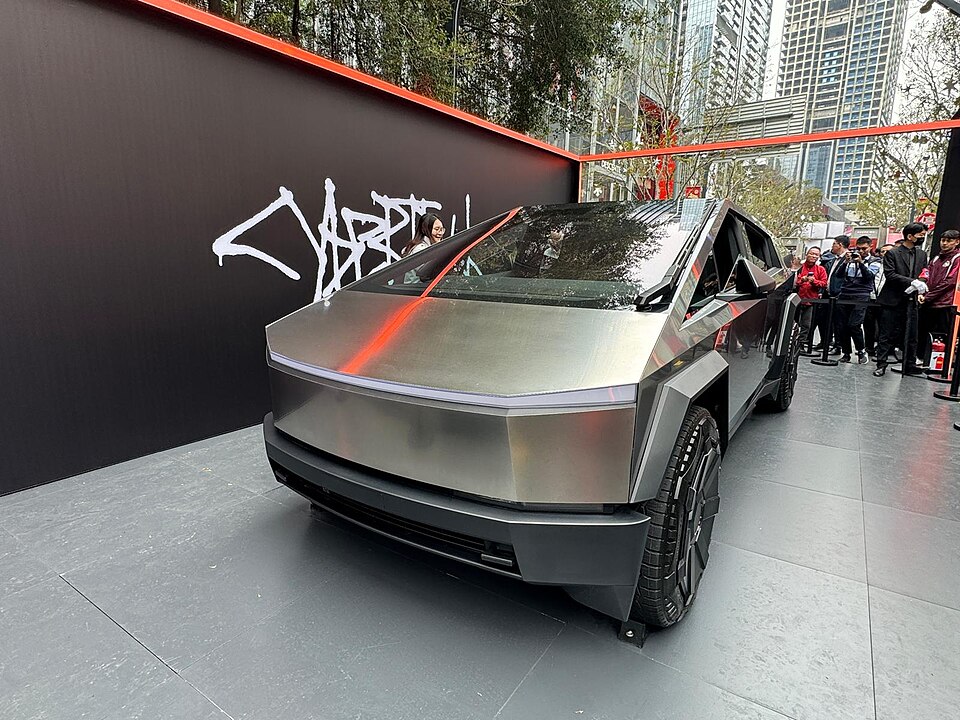
As China continues to shape global standards for AI governance, Tesla’s ability to adapt—both technologically and politically—could play a decisive role in its long-term success in the region. Photo by X120412, Wikimedia commons.


